
Why Emerson's Aggregate Test can miss highly dispersive soils
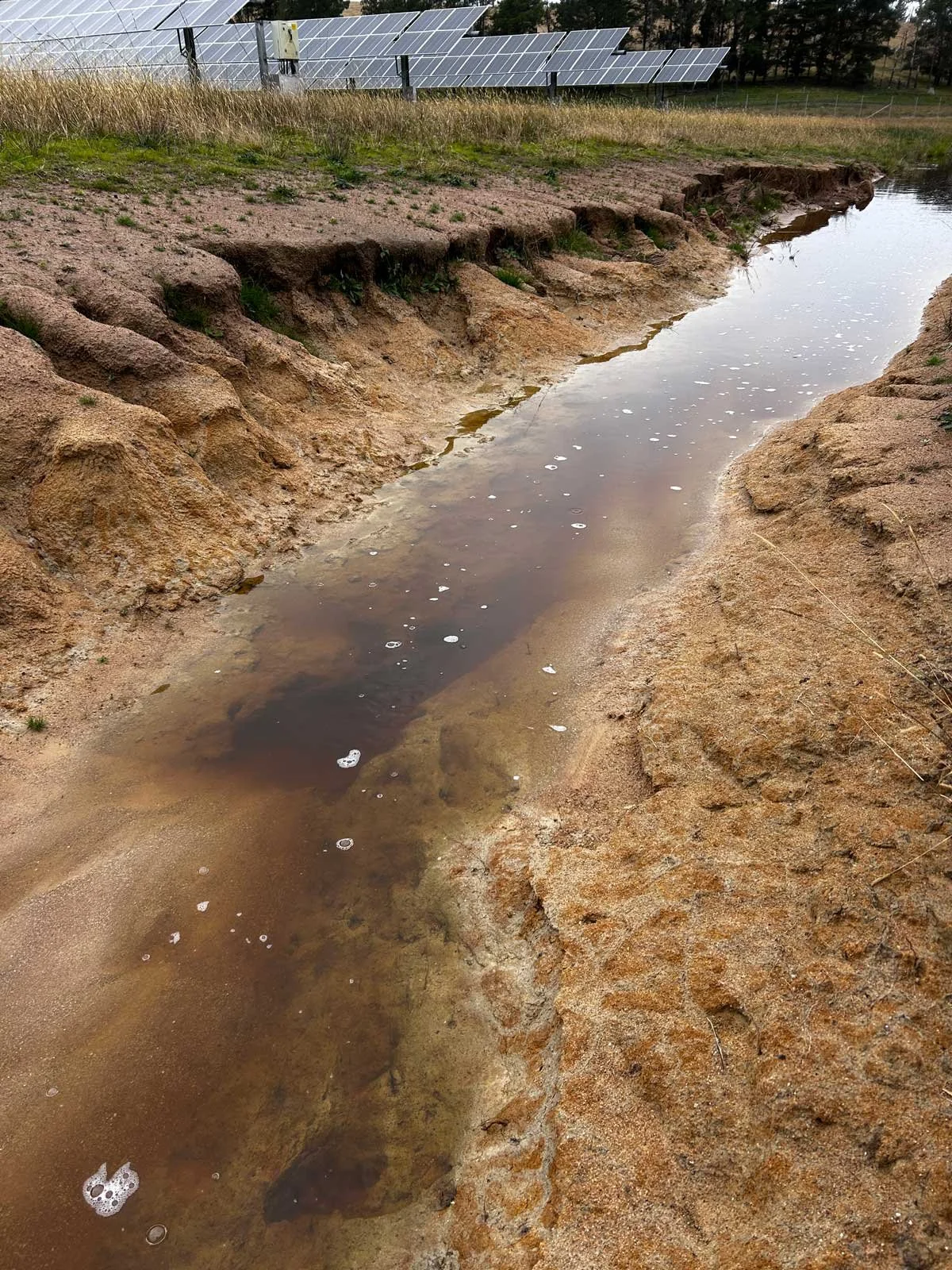
The Emerson’s Aggregate Test is frequently used to determine whether soils are expected to be dispersive or not. Whilst soils with a low Emerson’s Class number rarely turn out to be non-dispersive in the field, we have noticed a trend, particularly across linear and renewable energy projects in Central to North Queensland where Emerson’s Class is disguising highly sodic or magnesic and ultimately extremely dispersive soils.
Why is this?
Sodic soils (those with a high exchangeable sodium content) do not always exhibit low Emerson Aggregate Test classifications because other soil properties can suppress clay dispersion. Magnesic soils (those with a high exchangeable magnesium content) can present similarly. These stabilising factors can maintain aggregate integrity, resulting in an Emerson class that suggests greater stability than may occur under changing field conditions.
Factors that can reduce or mask dispersion in strongly sodic/magnesic soils include:
High salinity – Elevated dissolved salt concentrations promote flocculation of clay particles, reducing dispersion. However, if salts are leached by rainfall or fresh water, the soil may rapidly become dispersive.
Iron and aluminium oxides – These compounds act as cementing agents, binding soil particles together and improving aggregate stability.
High calcium levels – Calcium promotes flocculation and can offset the dispersive effects of sodium/magnesium where present in sufficient concentrations.
Organic matter – Organic carbon and root material help bind soil particles, increasing aggregate stability and resistance to breakdown.
Low clay content – Sandy or gravelly soils may contain elevated sodium levels but insufficient clay to exhibit dispersion in the Emerson test, resulting in anomalous or unrated outcomes.
Soil pH – Strongly acidic conditions can reduce dispersion by altering the surface charge of clay particles.
For this reason, Emerson Aggregate Test results should be interpreted alongside the exchangeable cation balance (respective concentration and percentage of select exchangeable cations and CEC). Consideration must also be given to electrical conductivity (EC) data to provide a more complete assessment of sodicity and dispersive behaviour and risks to the project (both short term during construction activities and long term ongoing maintenance requirements).
Further information on sodic and dispersive soils can be found in one of our previous Tech Talks.